

A bioregional approach
A bioregion is place shaped by watersheds, geology, soils, native plants, and the cultures that have grown from them. Bioregioning is the collective practice of restoring our relationship to that place - weaving people, land and living systems back into a resilient whole.
Bioregioning is about bringing vitality to the connections between people, place, and living systems — angling those systems towards regeneration and taking action for a climate-resilient and biodiverse future.
Our Bioregion Hub is community-led and functions as a nodal point hosting gatherings and facilitating the exchange of ideas, knowledge and resources (physical and/ or virtual) of various regeneration-related activities and collaboration networks within our bioregion.

Our projects
The Upper Medway bioregion is facing a deepening set of interconnected challenges. Water quality is declining due to agricultural runoff and sewage pollution, while increasingly erratic weather — from prolonged droughts to intense rainfall — is stressing both waterways and the farmers. Ancient woodlands, heathlands, and hedgerows are being lost and fragmented, severing the landscape connections that wildlife needs to move and thrive, and driving a broader decline in biodiversity. These ecological pressures are compounded by growing fragility in local food systems and questions of agricultural viability. Addressing these challenges requires joined-up thinking across the whole bioregion — and a shared commitment to the land and communities that call it home.
Despite the increasing stresses and pressures (or perhaps because of them) there are already many germinating and some well-established initiatives that bring hope and inspiration. We describe these as ‘stories that can be told’ from our landscape and its potential, here are some of the most important for the region:
.jpeg)
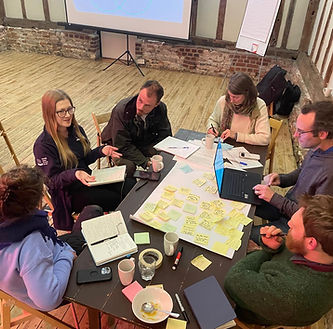
Medway Catchment Learning & Action Network
Similar to a bioregional learning centre, this project will support the projects listed below by establishing a facilitated network, developing social & learning infrastructure – partnerships, trust, shared vision and organisational capacity across the catchment. It is being run in collaboration with the Medway Catchment Partnership, Friends of the River Medway and Commonland.
River Medway restored
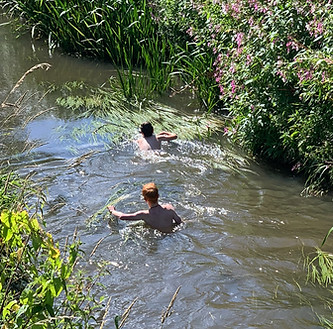
Prompted by a community’s despair at the rubbish-strewn upper stretch of the Medway, there is now an initiative stretching the whole length of the Medway River and its 2400 sq km catchment. The Friends of the River Medway and collaborations with farmers, citizen scientists, artists and local communities are gathering momentum and shifting local government policy (Maidstone Borough Council is the first in the UK to adopt a Rights of River framework).

Flourishing Farming & Food systems
The upper Medway region has a long history of small family farms stewarding the land. There have also been 40+ years of community support to secure land for community-owned farms. A growing network of organic and biodynamic farms, such as Plaw Hatch, Tablehurst, Bore Place, Great Cansiron Farm and others, is developing an ecosystem for farming with nature and allowing new entrants to gain experience in farming.
Reimagining Wealth
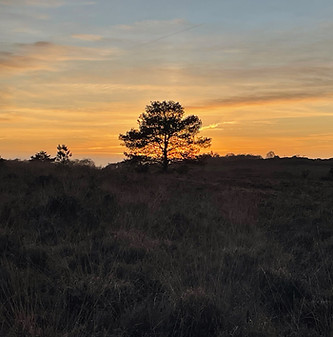
We have been inspired by pioneering work and writing about creating bioregional finance and are seeking partners to establish local systems to allow wise ways to invest for long-term wealth, biosphere health and community resillience. We aim to attract funding and investment that is looking for multi-capital returns, (see the 8 Forms of Capital model) and to move away from short-term extraction.
A Vision for 2035
Imagine travelling through our region in 2035…here are some of the things you would see and experience as a result of bioregional regeneration:
Revitalised local food and farming systems, producing nutritious food for the region, restoring soil health and, with it, the health of the River Medway, providing livelihoods and resilience for local communities and local cities. Bird species, mammals and rare plants that have disappeared or been in strong decline have returned, and the recovered biodiversity is being celebrated across the communities in the region. People are feeling a strong sense of belonging to the places they inhabit. They care for their local rivers and the Medway and are visiting the nearby waters and surrounding areas for respite; they are feeling connected to the rivers, the woodlands, and farmed and wilder landscapes, knowing their tourism and enjoyment is supporting the future.
There are highly respected centres in the landscape where land stewardship, craft, and food production skills are learnt and demonstrated. A new set of values and ways of seeing nature and humans' place within it are complemented with practical projects and places across the landscape, which support the next generations and career shifters into new roles, strengthening the rural, regional, and local economies.
A period of social and political tension is subsiding as meaningful work, access to healthy food and participation in community events provide a surface area for previously siloed communities to engage.
Local citizens celebrate and appreciate the significantly improved health of the Medway and its tributaries. Over the years of concerted efforts across different groups, they have become swimmable again and have become a point of community pride.
A bioregional financing facility is established: various models and organisations across the region invest with patient capital for regenerative farming, local resilient infrastructure and long-term stewardship.

4 Returns Framework
This practical holistic approach connecting people to nature and each other.

Inspiration
Giving people hope and a sense of purpose
Natural
Restoring biodiversity and soils for healthy and resilient landscapes

Social
Bringing back jobs, education and social connections
Financial
Realising long-term sustainable income for communities
*The 4 Returns is a framework developed by Commonland
Our Bioregion
The High Weald and Upper Medway Bioregion lies between London and Brighton in South East England, where the High Weald National Landscape overlaps the Upper River Medway catchment.
Forming the headwaters of one of southern England’s largest river systems, the area is defined by its well-preserved medieval landscape of rolling wooded hills, sandstone outcrops and small, hedged fields across Kent, Sussex, and Surrey.
The Ashdown Forest, famed as the setting for Winnie-the-Pooh, plays a vital role in supplying water to the Medway and supporting wider landscape conservation and river restoration.
The Upper Medway Hub includes a varied and vibrant team representing farmers & landowners, nature conservation and landscape restoration groups, a citizen science and civil society groups.


Our story
There are several threads that have begun to weave together locally to start the collaboration we are seeing. From an immersive study with the Regenesis Institute in Story of Place and Regenerative Practice, to attending courses with the Bioregional Learning Centre in Devon to conversations at the Oxford Real Farming conference and Groundswell Regenerative Farming conference with local folks from our region and , through to local family farms based around the River Medway, self-organising into a ‘cluster’ to offer peer support and collaboration through a challenging time for UK farming and nature recovery.
About the same time, we also engaged with the Friends of the River Medway, participating in a 9-day River Medway Pilgrimage 'From Source to Sea' – inspired by Li An Phoa's quest for drinkable rivers – and facilitated the first meeting with councillors, farmers and landowners and other critical stakeholders from across the Medway catchment to discuss the importance of the Rights of the River and the crucial part land stewards play in improving the health of their land and soil, which in return also helps improve the health of the River Medway.
This experience has been pivotal for many people in the room– it planted the seeds of inspiration and enhanced systemic awareness and tangible actions. What brought these different actors together was their shared concerns for the river and catchment and common issues they faced as land stewards (e.g. increasing numbers of droughts and floods as the most worrying one, regenerating the soil, creating food resilience and landscape recovery).
About a year later, we facilitated a multi-stakeholder enquiry process with 45 critical stakeholders including statutory bodies, nature conservation groups, communities, farmers and landowners. This has been buoyed by support from many organisations like the Friends of the River Medway, the Medway Catchment Partnership, South East Rivers Trust, the Upper Medway land stewards, the Conservators of the Ashdown Forest and many others looking to increase collaboration.
